BENJAMIN CH. MARAK: EMPOWERING RURAL LIVELIHOODS THROUGH COOPERATIVE STRENGTH
- admin's Blog
- Log in to post comments
In rural areas, accessing loans from formal financial institutions is often a difficult process. People are required to produce numerous documents and secure guarantors before a loan can be approved. Even when, they manage to obtain a loan, the burden of high interest rates, makes repayment challenging. As a result, many rural residents avoid seeking loans altogether, discouraged by the complicated procedures and heavy financial costs involved.
Recognizing these challenges faced by rural communities, the Meghalaya Livelihood Access to Market Project (Megha-LAMP), funded by the International Fund for Agricultural Development (IFAD), has taken a significant step to improve financial inclusion. Megha-LAMP has established more than 500 Integrated Village Cooperative Societies (IVCS) across rural Meghalaya. These IVCS function as grassroots financial institutions, managed and operated by the community itself. Their purpose is to provide accessible, community-driven financial services, reduce dependence on external institutions, and empower villagers with easier access to credit and livelihood opportunities.
By creating IVCS, Megha-LAMP not only addresses the grievances of rural people but also strengthens local economies, fosters self-reliance, and ensures that financial support is available at the village level without the excessive hurdles of traditional banking systems. These IVCS provide loans to their members at minimal interest rates, and the repayment system is designed to align with the specific livelihood activities for which the loans are taken.
Before the Cooperative: A Life of Struggles
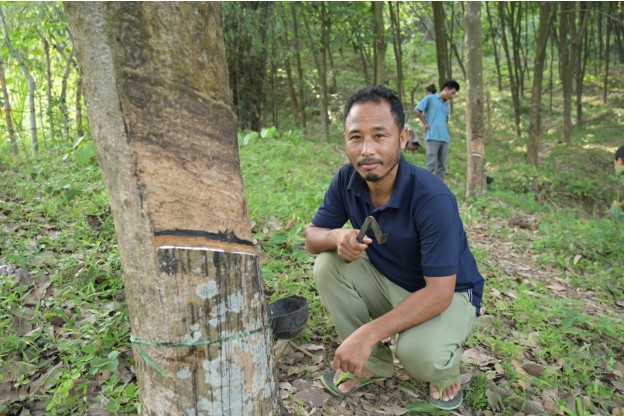
Benjamin Marak, a resident of Kentrikona village in South West Garo Hills, is the Secretary of the Kentrikona Integrated Village Cooperative Society (IVCS). Before the IVCS was established on September 19, 2017, life was far more challenging for him. He relied on small-scale business activities and daily wage labor, earning just enough to meet his family’s basic needs. Savings were almost nonexistent, and financial insecurity weighed heavily on him, an experience shared by many rural workers with limited opportunities for growth.
Benjamin owned around 300 rubber plants, producing 10–15 sheets per day. However, he had to travel nearly 5 kilometers to Chapahati village every day to roll these sheets, paying Rs. 5 per sheet to use the rolling machine. This routine was both physically demanding and financially draining, leaving little room for progress or stability.
Empowerment through Cooperation
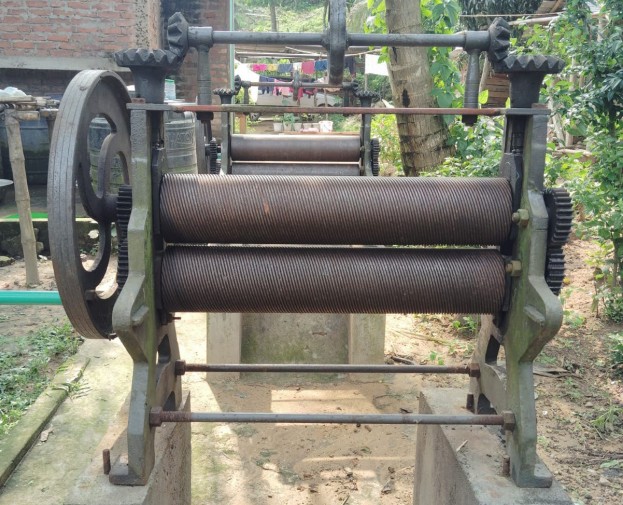
The creation of the Kentrikona IVCS marked a turning point in Benjamin’s journey. In 2023, he secured a loan of Rs. 70,000 from the IVCS, which enabled him to purchase a rubber rolling machine. This investment was transformative, saving him both time and money while boosting his income.
Each day, around five people use his machine to roll 40–50 sheets, generating a daily income of approximately Rs. 150. This not only enhanced his livelihood but also provided a valuable service to fellow farmers in the community. Previously, both he and his neighbors had to travel to Chapahati every day to roll their rubber sheets, paying Rs. 5 per sheet. However, after purchasing his own rubber rolling machine, even his neighbors can now roll their sheets locally at just Rs. 3 per sheet. This saves them both money and time, while strengthening the community’s self-reliance.
Loans that Sparked Change
The IVCS played a crucial role in Benjamin’s progress by providing timely financial assistance. The initial loan allowed him to invest in agricultural infrastructure, while subsequent support enabled him to diversify his income sources. After successfully repaying the first loan, Benjamin accessed another loan of Rs. 2, 00,000 to expand into a new venture.